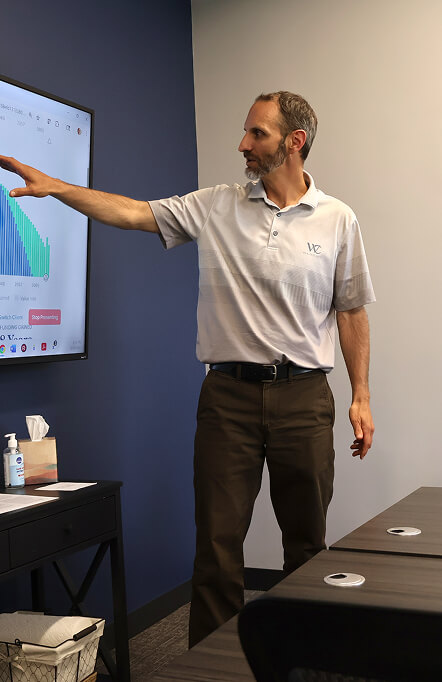


The wealth management industry is changing. As investors become more comfortable managing their finances online, wealth management firms are rethinking how they communicate with clients, provide portfolio information, and deliver ongoing investment management.
Digital portals, virtual consultations, electronic documents, and online account access are increasingly important components of the modern management experience.
For large wealth management firms, these technologies offer opportunities to improve efficiency and serve clients across broader geographic areas. For investors, they can make it easier to stay informed and connected to their managers.
However, digital-first wealth management shouldn’t mean replacing personalized financial advice with automated interactions.
At WealthClarity | Capital Management, we believe technology should make the management relationship more accessible without compromising the personal attention, fiduciary responsibility, and ongoing capital management that clients expect.
Our combination of virtual and in-person consultations reflects that philosophy.
What Is Digital-First Wealth Management?
Digital-first wealth management refers to a management approach that uses technology to make investment information, communication, and account-related services more accessible.
Rather than relying exclusively on office visits, mailed statements, and telephone calls, digital-first firms incorporate online tools into the client experience.
Common capabilities include:
- Online account and portfolio access
- Digital document sharing
- Virtual manager meetings
- Electronic signatures
- Secure client communications
- Portfolio reporting and performance monitoring
- Digital account onboarding
- Online appointment scheduling
These tools can simplify routine interactions while giving investors more flexibility in how they engage with their wealth management team. Importantly, digital-first does not necessarily mean digital-only.
A firm can embrace modern technology while maintaining direct relationships between clients and experienced wealth management .
Why Large Management Firms Are Investing in Digital Technology
Large wealth management firms often manage substantial assets across numerous offices, management, and client relationships.
Historically, coordinating those relationships involved extensive administrative work, physical documentation, and in-person meetings.
Digital technology can help streamline these processes.
Growing Expectations for Convenient Access
Investors increasingly expect financial information to be accessible when they need it. Many already use digital banking, investment applications, and online financial tools. They may reasonably expect similar convenience from their wealth management provider.
Instead of waiting for a scheduled meeting to review basic account information, clients may prefer access to current portfolio values, statements, and other available reporting through digital platforms.
Serving Clients Across Different Locations
Virtual meetings also make geographic distance less restrictive.
A family living in Colorado may own property in another state, spend part of the year elsewhere, or have adult children living across the country.
Digital communication allows management and clients to maintain relationships without requiring every conversation to take place in the same office.
Improving Administrative Efficiency
Electronic documents, digital signatures, and online workflows can reduce the time required for certain administrative tasks.
This can give management teams more time to focus on investment oversight, client communication, and complex capital management decisions. However, the benefits depend on how effectively the technology is implemented and whether it supports the client’s experience.
Digital Client Portals: Greater Visibility Into Managed Assets
One of the most recognizable features of modern wealth management is the digital client portal.
Depending on the platform, a portal may provide access to account balances, portfolio holdings, investment performance, documents, and other information. For individuals and families with substantial managed assets, this visibility can be particularly useful.
A high-net-worth household may hold investments across taxable brokerage accounts, retirement accounts, trusts, and other financial structures. Having convenient access to relevant information can make it easier to monitor investments and prepare for conversations with a manager.
Access Doesn’t Replace Interpretation
While digital reporting can provide valuable information, numbers alone don’t always explain whether a portfolio is appropriately managed.
A portfolio may show positive performance while still carrying unnecessary concentration risk. A strong return may also come with tax consequences that aren’t immediately obvious from a performance dashboard.
Similarly, short-term market declines don’t automatically mean an investment strategy is inappropriate. This is where professional portfolio oversight remains important.
Technology can help clients see what’s happening. An experienced manager can help explain what those developments mean for their broader wealth management objectives.
Virtual Wealth Management Meetings: Convenience Without Distance
Virtual meetings have become an important part of how wealth management firms communicate with clients. For busy professionals, business owners, and families, scheduling an online consultation may be easier than traveling to an office.
A virtual meeting can provide an opportunity to discuss portfolio performance, investment decisions, tax considerations, retirement income, and other financial priorities. It can also make it easier to include family members or outside professionals when appropriate.
For example, a business owner preparing for a liquidity event may need conversations involving wealth management , CPA, and attorney. Virtual communication can simplify coordination when those professionals work in different locations.
The Value of In-Person Consultations
Despite the convenience of virtual meetings, some clients prefer face-to-face conversations. Major financial transitions can involve complicated decisions and personal considerations. Retirement, business sales, inheritance, and multi-generational wealth transfers may benefit from extended discussions with trusted management.
The strongest management experience allows clients to choose the communication method that works best for them.
At WealthClarity, we offer both virtual and in-person consultations, allowing clients to connect with our team in a way that suits their circumstances. Schedule a Virtual or In-Person Consultation with WealthClarity.
Digital-First Wealth Management vs. Automated Investing
Digital wealth management and automated investing are sometimes discussed interchangeably, but they aren’t the same. Automated investment platforms, often called robo-advisors, typically use technology to recommend or manage portfolios based on information provided by investors. These services may be appropriate for certain investors seeking straightforward portfolio management.
However, high-net-worth households often face decisions that extend beyond automated asset allocation. Consider an executive with substantial employer stock, a business owner approaching a sale, or a family managing multiple investment accounts and estate considerations.
Their circumstances may require evaluating:
- Concentrated investment exposure
- Tax-aware diversification
- Retirement income requirements
- Capital gains management
- Charitable giving
- Business liquidity
- Estate and legacy objectives
- Coordination with outside professionals
Technology can support these decisions, but it doesn’t eliminate the value of experienced professional judgment.
For WealthClarity, digital convenience complements the personalized management of client assets rather than replacing it.
Why Fiduciary Advice Still Matters in a Digital Environment
As financial technology becomes more sophisticated, investors have access to an expanding range of tools, platforms, and investment products. That makes understanding management responsibilities especially important.
Fiduciary investment management is obligated to act in the client’s best interest when providing fiduciary advice. This responsibility doesn’t disappear when a meeting takes place online or portfolio information is delivered through a digital platform.
For investors, fiduciary relationships help establish expectations around investment recommendations, conflicts of interest, and professional accountability. At WealthClarity, our management relationships emphasize the fiduciary standard, transparent compensation, and ongoing investment management aligned with client objectives.
Digital tools can improve access to information, but fiduciary responsibility remains a foundational part of the management relationship. Learn more about our approach to wealth management and fiduciary relationships on the WealthClarity homepage.
The Importance of Personalized Capital Management
A digital-first management model should make it easier to receive personalized guidance, not encourage one-size-fits-all investment decisions. Two households with identical portfolio balances may have entirely different financial priorities.
One family may be approaching retirement and need reliable income from managed assets. Another may be accumulating wealth through equity compensation while managing significant tax exposure. A third may be preparing to sell a privately held business.
Although technology can help organize information and support portfolio monitoring, each household requires an investment approach that reflects its circumstances. At WealthClarity, we emphasize understanding what a client’s capital needs to accomplish before determining how to manage it. This includes evaluating investment objectives, risk tolerance, liquidity needs, tax considerations, and long-term financial priorities.
How WealthClarity Balances Technology With Personal Service
WealthClarity’s approach combines modern accessibility with ongoing management relationships.
Clients can connect with our team virtually or meet in person at our Lakewood, Colorado, location. Our wealth management approach emphasizes direct communication, coordinated investment decisions, and ongoing oversight of managed investments.
Through our Clarity Blueprint™, we follow a structured process designed to connect investment management with each client’s objectives.
Discover
We begin by understanding your assets, investment priorities, financial circumstances, and long-term goals.
Design
We develop a coordinated wealth management strategy incorporating portfolio construction, risk management, tax awareness, and other relevant considerations.
Deploy
We help implement the investment and capital management decisions appropriate for your circumstances.
Monitor
We provide ongoing oversight and evaluate adjustments as markets, investment conditions, and client needs evolve.
This process emphasizes an important distinction: technology may improve how clients interact with their management , but personalized investment management remains central to the relationship.
What Should Investors Look for in a Digital-First Wealth Management Firm?
When evaluating a modern wealth management provider, consider more than whether the firm offers online access. Ask how technology supports the actual management relationship.
Important questions include:
- Can I meet with a manager virtually and in person?
- Will I have a dedicated management relationship?
- How can I access my portfolio information?
- What security measures protect sensitive information?
- How frequently will my investments be reviewed?
- How does the firm incorporate tax considerations?
- Does the manager operate under a fiduciary standard?
- Can the firm coordinate with my CPA, attorney, or other professionals?
A well-designed digital experience should make communication and account management easier while preserving the quality of professional advice.
The Future of Wealth Management Is Both Digital and Personal
Digital technology will continue influencing how management firms operate.
Investors can reasonably expect more convenient communication, improved access to information, and increasingly efficient administrative processes.
However, convenience alone doesn’t determine the quality of a wealth management relationship. The ability to evaluate investment risk, coordinate tax-aware decisions, manage retirement income, and respond to major financial transitions remains essential.
For high-net-worth individuals and families, the most effective approach may combine modern technology with experienced management who understand their financial circumstances. Digital access makes wealth management more convenient. Personalized fiduciary advice helps make it meaningful.
Virtual and In-Person Wealth Management in Colorado
WealthClarity | Capital Management provides ongoing wealth and investment management for individuals, families, professionals, and business owners.
Based in Lakewood, Colorado, we serve clients throughout Denver, the Front Range, and across the United States.
Our approach combines personalized management relationships, tax-aware investment management, portfolio oversight, and convenient consultation options.
Whether you prefer meeting face-to-face or connecting virtually, our team focuses on helping you manage your assets with clarity, discipline, and long-term perspective.
Modern wealth management shouldn’t require choosing between convenience and personal attention. Schedule Your Complimentary Virtual or In-Person Consultation to learn more about WealthClarity’s approach to managing your wealth.